
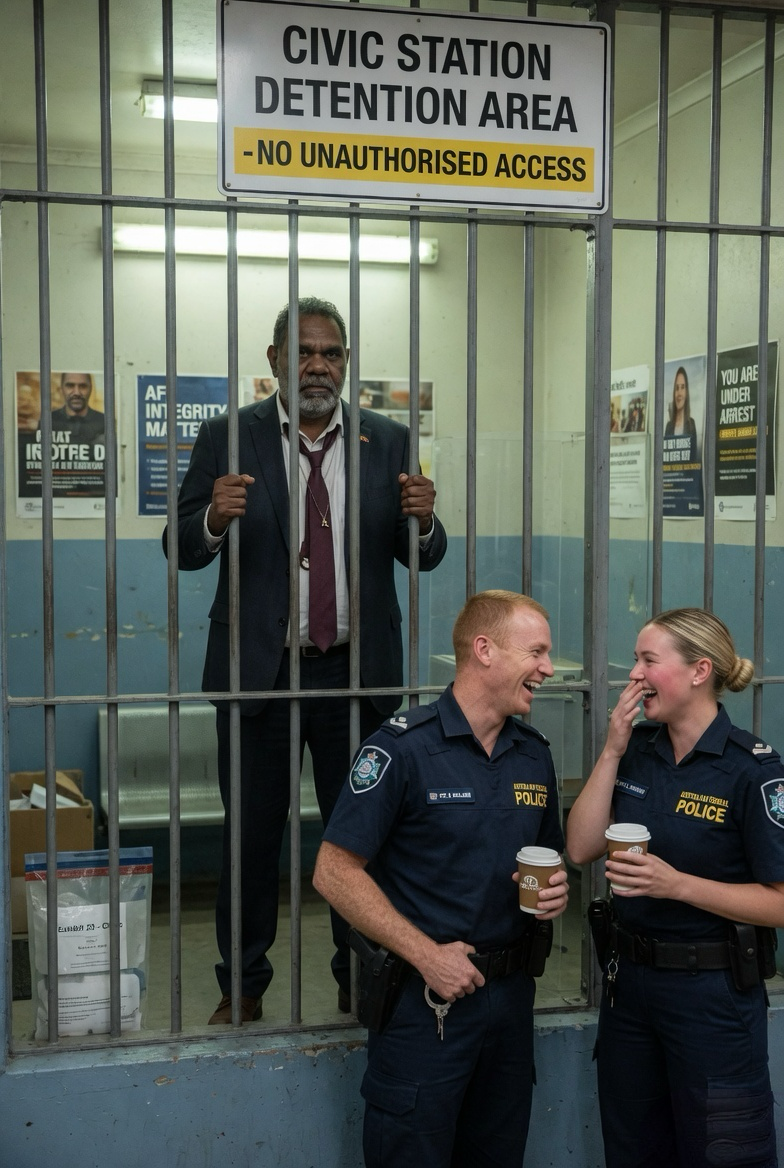


Questioning Genuine Commitment by the ACT Government and the Australian Federal Police to Ensure the ACT is a Safe Space for Indigenous People to Live and Work
“Safety is not declared by policy but experienced by people.”
I. Introduction: The Architecture of Sincerity
There is a particular kind of political dishonesty that does not announce itself with falsehood. It arrives dressed in the language of commitment, wrapped in the vocabulary of reconciliation, and sustained by a bureaucratic rhythm of reviews, reports, action plans, and apologies that substitute the appearance of reform for its substance. It is, in essence, the architecture of sincerity without its load-bearing walls. Whether the Australian Capital Territory Government and the Australian Federal Police have genuinely committed to making the ACT a safe space for Indigenous people to live and work – or whether they have instead constructed an elaborate performance of commitment behind which systemic racism continues largely undisturbed – is the question this essay undertakes to examine.
The ACT occupies a peculiar position in Australian political culture. It presents itself as the progressive heart of the nation: the jurisdiction that passed Australia’s first Human Rights Act in 2004, that enshrines multiculturalism as a governing value, that has committed under the National Agreement on Closing the Gap to work in genuine partnership with First Nations communities. Canberra is, after all, the seat of federal government, a city of policy professionals and public servants, a place that should, by any reasonable expectation, understand and enact the letter and spirit of Indigenous rights frameworks better than anywhere else in the country.
Yet the evidence accumulated over more than a decade – through parliamentary inquiries, independent reviews, Ombudsman investigations, community testimony, employee surveys, and the unresolved histories of individual cases stretching back to the early 2000s – tells a fundamentally different story. It is a story of the highest Indigenous adult imprisonment rate of any Australian jurisdiction. Of seven First Nations men dying in ACT custody between 2023 and 2025. Of forty-one percent of Aboriginal and Torres Strait Islander employees in the ACT Public Service reporting they do not feel culturally safe at work. Of a seventeen-year-old Aboriginal boy removed from a bus at gunpoint. Of a Public Interest Disclosure alleging fraud and racism filed in 2003 that remains uninvestigated for more than two decades. Of a system that, when confronted with evidence of its own failure, responds with training programs, cultural plans, and carefully worded apologies – then continues along the same structural paths.
This essay argues that the ACT Government and the AFP have not demonstrated genuine commitment to Indigenous safety in the ACT in any meaningful, measurable, or sustained sense. What they have demonstrated is a capacity for institutional self-preservation: the ability to absorb criticism, produce responsive-sounding documentation, and forestall transformative accountability while the underlying conditions that make the ACT unsafe for First Nations people remain intact. The distinction matters enormously. A government that is genuinely committed to change acts before it is compelled to. It funds independent oversight rather than defending internal processes. It resolves historical grievances rather than hoping they will exhaust themselves. It measures outcomes rather than inputs. By each of these markers, the ACT Government and the AFP fall significantly short.
II. Policing and the Problem of Institutional Self-Diagnosis
The relationship between ACT Policing – delivered by the Australian Federal Police under contract to the ACT Government – and the Territory’s Indigenous communities is one of the most contested and consequential fault lines in the Territory’s public life. It is also, by any honest reading of the available evidence, a relationship characterised by persistent harm, inadequate accountability, and a culture of institutional self-defence that has consistently prioritised the organisation’s reputation over the safety of the people it is supposed to serve.
The most comprehensive recent account of this relationship appears in the July 2025 Jumbunna Institute Independent Review into First Nations over-representation in the ACT criminal justice system, a landmark document that synthesised the testimony of 175 participants and 71 organisations across months of intensive community engagement. Its findings on policing were damning. Indigenous community members described a pattern of being targeted by police based on appearance, name, or prior contact history – a profile-based approach to enforcement that transforms Indigeneity itself into a marker of suspicion. Officers were described as exercising their discretionary powers punitively in arrests, bail decisions, and responses to family violence in ways that consistently disadvantaged Aboriginal and Torres Strait Islander people. Witnesses reported that the police response to their victimisation was often characterised by a lack of compassion, a tendency to shift blame onto victims, and an absence of cultural understanding so profound that many First Nations people had simply stopped reporting crimes at all.
These findings did not emerge from a vacuum. They give systemic context to a series of high-profile incidents that, taken together, reveal not aberrant behaviour by individual officers, but a pattern of conduct that the organisation’s leadership has repeatedly declined to characterise as institutional. In November 2025, ACT Police stopped a bus, allegedly removed a seventeen-year-old Aboriginal boy at gunpoint, and subjected him to significant force even after his identity was confirmed and it became clear he was not the armed suspect they sought. Community leaders, members of the ACT Aboriginal and Torres Strait Islander Elected Body, and independent MLA Thomas Emerson described the incident as racial profiling and police brutality. The boy’s family and the broader Indigenous community condemned it in the starkest terms. A joint community statement declared that no Aboriginal child in Canberra should ever face a gun because of police racial profiling.
Chief Police Officer Scott Lee issued an apology for the trauma caused. He did not accept that the incident reflected institutional racism. He attributed the level of force deployed to the presence of an active threat. The matter was referred to an internal AFP Professional Standards investigation – the very same mechanism that has failed, over decades, to produce meaningful accountability in relation to Indigenous complaints. Here, precisely, is where the question of genuine commitment becomes unavoidable. An organisation sincerely committed to the safety of Indigenous people does not, when confronted with evidence of potentially racist conduct, refer the matter to an internal process it controls and declare that it does not have institutional racism. It invites independent scrutiny. It acts as though the outcome of that scrutiny matters more than the protection of its own institutional narrative.
The incident involving the bus was not isolated. In May 2025, the Aboriginal Legal Service publicly raised serious concerns about the treatment of another seventeen-year-old Aboriginal boy in an ACT watch house. Accounts described the boy being tasered while restrained, subjected to verbal abuse including taunts about lacking parents and about suicide, pinned to the ground, and having his clothing cut from his body. A magistrate described the taser use as unjustifiable. Again, the AFP’s response was to defend its processes, commit to training, and resist the characterisation of systemic failure.
These incidents are not, by themselves, proof of a conspiracy or of bad faith across the entire organisation. People in complex, high-pressure roles sometimes make terrible decisions. But the AFP’s consistent refusal to accept independent oversight, its recourse to internal investigation as the primary accountability mechanism, and its rhetorical rejection of the concept of institutional racism in the face of evidence to the contrary – these are the markers of an organisation that has decided, at some level of institutional consciousness, that its own self-image matters more than the safety of Indigenous people. That is not commitment. It is its negation.
The Jumbunna Review recommended an independent systemic racism review of policing discretion, use of force, and organisational culture. The ACT Government’s response was to note the recommendation and restate its commitment to training and engagement. Training and engagement, in the absence of independent oversight and structural accountability, are not reform. They are the ritual performance of reform – the means by which an institution can claim to have taken action while ensuring that action stops well short of anything that might disturb existing power arrangements.
III. Corrections and the Calculus of Custody
If ACT Policing represents the front end of the Territory’s engagement with Indigenous people in the criminal justice system, ACT Corrective Services and the Alexander Maconochie Centre represent its deepest point – the place where the cumulative weight of every preceding failure bears down most heavily on the people who end up there. The conditions at the AMC, and the conduct of those who administer it, provide some of the most disturbing evidence of the gap between the ACT’s progressive self-presentation and the reality experienced by First Nations people within its institutions.
The ACT has the highest Indigenous adult imprisonment rate of any Australian jurisdiction. This is not a historical legacy being slowly corrected. It is a contemporary reality that has persisted through years of government strategies, cultural awareness initiatives, and Closing the Gap commitments. The imprisonment rate for Indigenous people in the ACT runs at approximately twenty-two times the rate for non-Indigenous people – a disparity so extreme that it cannot be explained by reference to individual circumstances or community characteristics. It is, by any honest assessment, the product of systemic forces: policing practices that disproportionately criminalise Indigenous people, bail laws and conditions that disproportionately result in remand, legal and support systems structurally inadequate to the needs of First Nations defendants, and a corrections system that has failed to provide culturally appropriate pathways out of the justice system.
Within the AMC itself, the Jumbunna Review documented a deeply troubling picture. Detainees described racial targeting in the use of sniffer dogs, in the conduct of strip searches, in decisions about segregation, and in security classifications. The differential treatment described was not subtle. Indigenous and Islander detainees reported being processed differently, subjected to more intensive scrutiny, and afforded fewer of the small dignities that make incarceration something less than a complete destruction of personhood. The AMC has been described by those who have experienced it as a racist jail – not as a rhetorical flourish, but as a factual account of daily life within it.
The deaths make abstract statistics unbearably concrete. Between February 2023 and February 2025, seven First Nations men died in AMC custody. Seven. In a facility in a small territory with a tiny Indigenous population. The community response used the word bloodbath. These deaths prompted calls for an independent inquiry focused on systemic racism, links to the youth-to-adult incarceration pipeline, and the role of drugs in the facility. A Board of Inquiry was announced in May 2025 and was still ongoing into 2026. This is, in itself, a significant step – but the timeline matters. Seven deaths were required before a Board of Inquiry was announced. The question of genuine commitment must include the question of what it takes to compel action. A government genuinely committed to Indigenous safety does not wait for seven deaths.
Earlier incidents cast long shadows. In 2018, corrections officers created a racist drawing depicting a hanged Aboriginal detainee with disability, accompanied by colonial imagery, in what was described as a context of laughter and amusement among staff. The ACT Civil and Administrative Tribunal later ruled the conduct deeply racist. An apology was issued. But what cultural conditions permitted that drawing to be made and shared among staff? What accountability followed beyond the apology? What structural changes were implemented to prevent recurrence? These are the questions that reveal the depth or shallowness of institutional commitment, and the answers in this case are deeply unsatisfying.
In 2021, an ACT Supreme Court matter decided in 2025 found that a strip search of an Aboriginal woman detainee conducted with riot-gear officers present had breached her human rights to humane treatment and dignity. Broader concerns about the disproportionate strip-searching of Indigenous women in the AMC remain inadequately addressed. The pattern is consistent: a violation occurs, a legal or quasi-legal process eventually confirms it was a violation, an apology or acknowledgment is issued, and the structural conditions that made the violation possible are left substantially intact.
The ACT Corrective Services framework, Be the Change We Seek, is emblematic of this approach. The language is aspirational and the intent may be sincere among those who drafted it. But frameworks and training programs are inputs, not outcomes. The outcome data – the imprisonment rate, the deaths in custody, the detainee testimony collected by Jumbunna – tells a story that no amount of well-intentioned framework language can contradict.
IV. The Workplace and the Weight of Invisibility
The question of whether the ACT is a safe space for Indigenous people is not confined to the criminal justice system. It extends into the everyday experience of First Nations people who attempt to build careers and contribute their expertise within the ACT Public Service – the very institution that is supposed to model the values the Territory claims to hold. The evidence from within the ACTPS is not, on its own terms, as viscerally dramatic as deaths in custody or children held at gunpoint. But it is, in some respects, more revealing of the depth and breadth of the problem, because it demonstrates that institutional racism in the ACT is not a phenomenon of the justice system alone. It permeates the government itself.
The findings of the September 2025 ACTPS Employee Survey, released publicly in early 2026 through Freedom of Information requests made by independent MLA Thomas Emerson, should have constituted a crisis of institutional conscience. Forty-one percent of Aboriginal and Torres Strait Islander employees reported that they did not feel culturally safe at work. Fourteen percent reported experiencing discrimination or racism in the preceding twelve months – rates substantially higher than those reported by non-Indigenous staff. These are not the findings of a jurisdiction that has made genuine progress in creating a safe workplace for First Nations people. They are the findings of a jurisdiction where nearly half of all Indigenous employees feel that their identity, their culture, and their dignity are not protected in their own workplace.
The testimony of Brendan Moyle, a Kamilaroi and Gomeroi man who served as head of the ACT Government’s Office for Aboriginal and Torres Strait Islander Affairs, gives flesh to those statistics in ways that are deeply confronting. Moyle’s public account in 2025 and 2026 described a system characterised by systemic discrimination, the imposition of excessive cultural load on Indigenous staff, the ignoring of mental health warnings including his own documented experiences of exhaustion and suicidal ideation, and policy negligence that actively undermined the government’s Closing the Gap commitments. Internal documents, as he described them, painted a picture of a system designed not merely to fail Aboriginal staff but to fracture and destroy the spirit of those who tried to work within it.
Moyle’s allegations were referred to the ACT Public Sector Standards Commissioner in March 2026. This is, again, a step that can be characterised as a response, but it comes after years of harm that Moyle and others had raised through internal processes without resolution. The referral to a Standards Commissioner is what happens when a system has exhausted its internal capacity to ignore a problem. It is accountability by attrition – the last resort rather than the first response.
The government’s commitment to cultural safety programs in the ACTPS is stated with apparent sincerity. Cultural safety training, the Respect, Equity and Diversity Framework, and commitments under Closing the Gap legislation are regularly cited as evidence of progress. But a system in which forty-one percent of Indigenous employees do not feel culturally safe – despite all these programs – is a system whose programs are not working. Either the programs are inadequate in design, inadequate in implementation, or inadequate in the organisational culture that surrounds and ultimately subverts them. In any of these cases, the appropriate response is not to cite the programs as evidence of commitment. It is to acknowledge their failure and ask much harder questions about why they have failed.
V. The Mullins Paradigm: When History Is Not Past
Any serious examination of the ACT Government’s commitment to Indigenous safety must reckon with the case of Mark Mullins, because it represents something more than a historical injustice. It represents a test of institutional learning that the ACT Government has, over more than two decades, comprehensively failed.
Mark Mullins was appointed in 2002 as the first – and, to date, only – Indigenous Commissioner for ACT Revenue. He was, in other words, the most senior Indigenous public servant the ACT Revenue Office had ever had. In June 2003, he lodged a Public Interest Disclosure alleging fraud, probity failures, and human rights issues within ACT Treasury and the ACT Government. The PID reportedly vanished after being received by the Chief Executive. It went uninvestigated by the relevant directorate, by the Ombudsman, and by the AFP for more than two decades.
The racism that underpinned Mullins’ removal from his role is documented with unusual specificity. A subordinate, Angel Marina, wrote to Treasury executives in May 2002 explicitly demanding Mullins’ dismissal and grounding that demand in his Aboriginality. The letter referenced what Marina characterised as the general disposition of Aborigines to lie and the criminal records of his family, and cited a supposed consultation with Ernst and Young confirming views that Aborigines are compulsive liars and criminals. If these allegations are accurate – and the documentary record compiled by advocate BlakandBlack over many years provides substantial basis for their credibility – they represent not a dog-whistle but a foghorn: racism of the most explicit and operationalised kind, deployed at the highest levels of the ACT bureaucracy to remove the Territory’s most senior Indigenous public servant.
The consequences cascaded through evidence, institutional responses, and years of attempted accountability. Databases were corrupted when subpoenaed. A diary seized in 2004, detailing the racism Mullins had experienced and what he described as a deliberate fit-up, disappeared from AFP custody. An AFP investigation into the matter, led by the officer who is now Commander Rowena Penfold, was characterised by allegations of bias including racially charged comments made during the execution of a search warrant. Court proceedings produced at least one successful Supreme Court challenge against the AFP. Mullins was demoted and effectively removed from his role in late 2003. The PID remained uninvestigated.
The Mullins case is not, as some might prefer to characterise it, a historical matter belonging to a different era of institutional culture. It continues into 2026, with ongoing diary publications and unresolved accountability. More importantly, it is not a historical matter because the institutional patterns it exemplifies – the disappearing of complaints, the protection of power over the protection of individuals, the multi-agency insulation from accountability, the failure to investigate disclosures that implicate the system itself – are the same patterns visible in the ACTPS employee survey data, in Brendan Moyle’s testimony, in the response to the Jumbunna recommendations, and in the AFP’s handling of complaints about racial profiling.
A genuinely committed government would have resolved the Mullins matter years ago. It would have investigated the PID, restored the record, and created a framework for accountability that made such a case impossible to replicate. Instead, the case persists as an open wound in the ACT’s relationship with its own history – evidence that the Territory’s institutions are capable, when sufficiently motivated, of burying uncomfortable truths for a very long time.
VI. The Grammar of Non-Commitment
There is a grammar of non-commitment that Australian governments have refined over decades of engagement with Indigenous rights issues, and the ACT Government and the AFP deploy it with considerable fluency. It has several characteristic features.
The first is the acknowledgment without admission. When confronted with evidence of harm – a death in custody, a boy held at gunpoint, survey data showing pervasive discrimination – the institution acknowledges the concern, expresses regret for the trauma caused, and commits to examining the matter further. It does not admit fault. It does not accept that the harm reflects systemic conditions. It treats each incident as discrete and each piece of evidence as preliminary, always pending further review.
The second feature is the substitution of process for outcome. Boards of Inquiry, Standards Commissioner investigations, cultural safety training programs, anti-racism working groups, and Closing the Gap action plans are cited as evidence of commitment. They are inputs, not outputs. The measure of genuine commitment is not the number of processes initiated but the conditions those processes produce. The ACT Government has been initiating processes in relation to Indigenous safety for more than a decade. The conditions have not improved commensurately. The gap between the sophistication of its process architecture and the inadequacy of its outcomes is itself the evidence.
The third feature is the defence of internal accountability as sufficient. Both the ACT Government and the AFP consistently resist demands for genuinely independent oversight. Community advocates, the Jumbunna Review, and a succession of Ombudsman and parliamentary inquiries have recommended stronger independent mechanisms. The institutional response is invariably to argue that existing processes are adequate, that investigations are underway, that the organisation takes these matters seriously. The circularity of this argument – trust us to investigate ourselves – is structurally incapable of producing the accountability it purports to offer.
The fourth feature is the framing of systemic racism as a series of individual failings. Chief Police Officer Lee’s rejection of the characterisation of institutional racism in the AFP is the clearest recent example, but the pattern runs across all the institutions examined in this essay. By attributing harmful conduct to individuals – officers who exercised poor judgment, staff members who behaved inappropriately – the institution protects its own identity from the much more significant challenge of admitting that the system itself produces harmful outcomes as a predictable consequence of its structure, culture, and incentive arrangements. This framing is not only analytically inadequate. It is ethically dishonest, because it places the burden of institutional failure on the individuals who are least responsible for it.
The fifth and perhaps most insidious feature is the weaponisation of progress. When the ACT’s response to evidence of systemic failure includes reference to slight reductions in imprisonment rates, investments in culturally specific programs, or the existence of the Human Rights Act, it is deploying genuine elements of a partial truth in the service of a misleading conclusion. The ACT does have a Human Rights Act. Imprisonment rates have shown some slight movement. There are culturally specific programs. These things are real and not meaningless. But they are being mobilised not as honest accounts of a system in genuine transition but as rhetorical shields against the demand for deeper accountability.
VII. What Genuine Commitment Would Look Like
It is important, in any essay of this kind, to be specific about the alternative. The argument that the ACT Government and the AFP have not demonstrated genuine commitment to Indigenous safety is not the argument that nothing good has been done, or that every individual within these institutions is complicit in harm, or that systemic change is impossible. It is the argument that genuine commitment would look qualitatively different from what has been produced – and that describing what genuine commitment would look like is essential to understanding how far short of it the current reality falls.
Genuine commitment would begin with independent, ongoing oversight of ACT Policing’s interactions with Indigenous communities. Not a one-off review, not an internal investigation, but a standing independent body with the power to examine complaint patterns, use-of-force data, and discretionary decision-making in real time, with findings that are public, binding, and consequential. The Jumbunna Review recommended an independent systemic racism review of policing. The ACT Government committed to considering it. Consideration is not implementation.
Genuine commitment to corrections would mean treating the deaths of seven First Nations men in two years as the constitutional crisis it effectively represents – not a management problem to be addressed through a Board of Inquiry that reports on its own timeline, but an emergency requiring immediate structural intervention. It would mean investing in culturally led diversion, remand reduction, and post-release support at a scale commensurate with the scale of the problem. It would mean measuring incarceration rates against explicit targets, publishing those measurements, and being publicly accountable for failure to meet them.
Genuine commitment to the ACTPS as a safe workplace for Indigenous people would mean treating a finding that forty-one percent of First Nations employees do not feel culturally safe not as an input into a cultural safety program review, but as a finding of institutional failure requiring root-cause analysis, leadership accountability, and external verification of whatever remediation is undertaken. It would mean asking, honestly and publicly, why every previous program, framework, and training initiative failed to prevent that finding.
Genuine commitment to historical accountability would mean resolving the Mullins matter – not merely acknowledging its existence but investigating the PID, restoring the record where possible, providing an accounting of how institutional processes allowed the matter to proceed as it did, and ensuring that the individuals and processes responsible are named and examined rather than protected by the passage of time. This is uncomfortable. It is also what accountability looks like.
Genuine commitment would also mean a different relationship to the concept of institutional racism itself. The rhetorical rejection of that concept by police leadership is not merely semantically incorrect – it is politically strategic. By refusing to accept that systems produce outcomes independent of individual intent, the AFP insulates itself from the most fundamental demand: not for better individuals within the system, but for a different system. The ACT Government has the power to insist on a different framing as a condition of the policing contract. That it has not done so is a choice.
VIII. Conclusion: The Distance Between Words and Witness
The title of this essay borrows from a distinction that is fundamental to any serious engagement with the question of institutional racism: the distinction between words and witness. Words are what institutions produce when they are confronted with evidence of their failure. Witness is what happens when those words are put to the test of lived experience. The ACT Government and the AFP have produced many words about Indigenous safety. The witness of First Nations people who live, work, and encounter the criminal justice system in this Territory is that those words have not been matched by conditions.
The highest Indigenous imprisonment rate in the country. Seven deaths in custody in two years. A seventeen-year-old Aboriginal boy removed from a bus at gunpoint. A seventeen-year-old Aboriginal boy tasered in a watch house. Forty-one percent of Indigenous ACTPS employees without cultural safety at work. A Public Interest Disclosure filed in 2003 that disappeared and remained uninvestigated for more than two decades. The first and only Indigenous Commissioner for ACT Revenue driven from his role by explicit racist demands that his Aboriginality disqualified him from authority. These are not aberrations in a system that is otherwise working. They are the system working as it actually works – not as its policy documents describe it.
The ACT Government has not demonstrated genuine commitment to Indigenous safety because genuine commitment requires accepting an accountability that produces discomfort, that names failure honestly, that invites rather than resists independent scrutiny, and that measures success by outcomes rather than by the sophistication of its process architecture. On each of these dimensions, the ACT falls short. It has produced progressive legislation and aspirational frameworks. It has initiated reviews and committed to training. It has expressed regret and acknowledged trauma. But it has not fundamentally altered the structural conditions that make the ACT a jurisdiction in which First Nations people are imprisoned at twenty-two times the rate of non-Indigenous people and in which nearly half of all Indigenous public servants feel unsafe in their own workplace.
This is not to suggest that no one within these institutions cares, or that the challenge is simple, or that progress is impossible. There are people within the ACT Government and the AFP who are genuinely motivated to create something different. There are programs that have had genuine impact. There is a Human Rights Act that, deployed with sufficient political will, provides real legal architecture for change. The Jumbunna Review, the Board of Inquiry, the Standards Commissioner investigation, and the advocacy of people like Brendan Moyle and BlakandBlack represent a constellation of pressure that, if sustained, might produce different results.
But potential is not commitment, and pressure is not the same as purpose. The question asked in this essay – whether the ACT Government and the AFP have demonstrated genuine commitment to making the ACT a safe space for Indigenous people to live and work – has an answer that the evidence makes difficult to avoid. They have not. They have demonstrated a capacity to manage the political and reputational consequences of failing Indigenous people. That is a very different thing.
Safety, as the weight of evidence in this essay makes clear, is not declared by policy. It is not produced by training programs or action plans or well-intentioned frameworks. It is not achieved by managing the optics of failure or by defending internal processes from external scrutiny. Safety is experienced by people – in their bodies, in their workplaces, in their encounters with authority, in the texture of daily life. Until the ACT Government and the AFP accept the full implications of that fact and organise their institutions accordingly, the distance between their words and the witness of First Nations people in this Territory will remain exactly what the evidence shows it to be: vast, documented, and unresolved.
Note on Sources
This essay synthesises publicly available reports, reviews, parliamentary records, independent inquiries, community testimony, and advocacy documentation relating to Indigenous safety in the Australian Capital Territory, with particular reference to the July 2025 Jumbunna Institute Independent Review, the September 2025 ACTPS Employee Survey (released via FOI), the testimony of Brendan Moyle (2025–2026), the Board of Inquiry into deaths at the Alexander Maconochie Centre (announced May 2025), and the long-form investigative record compiled by advocate BlakandBlack in relation to the case of Mark Mullins. Specific allegations are presented as allegations alongside official responses, in support of analysis rather than adjudication.